Based in Lyon, we run in-person workshops throughout Auvergne-Rhône-Alpes (AURA), as well as online. We can also travel to Paris.
Odoo workshop for SMEs: structure your processes and centralize your management with an ERP
Odoo workshop for SMEs, in person in Lyon and across Auvergne-Rhône-Alpes, or online (duration: 2 hours)
Many companies grow with scattered tools. At first it works, then the limits show up: double data entry, conflicting data, wasted time and a lack of visibility. Odoo takes a different approach: a modular ERP that can centralize sales, invoicing, purchasing, projects, inventory, accounting, HR and customer relations in a single environment.
In this Odoo workshop for SMEs, we show how Odoo can become the operational backbone of your business. We start from your actual processes, map them, then show how to structure them in Odoo to gain clarity, reliability and speed of execution.
In 2 hours, you see how to move from a pile of disconnected tools to integrated workflows: quote → invoice → payment tracking, opportunity → customer → project, order → stock → delivery, time spent → invoice, document → approval. Fewer errors, more control.
This workshop is presented by a consultant from Hors du Commun.
🕰️ 2 hours
🏫 In person or online
🧑🏼🎓 Minimum of 6 participants
No dates are currently scheduled. You can request a new date by entering your email:
You will receive the registration link by email 🫡
How do you implement Odoo in an SME without breaking the bank?
Optimize your processes, control your costs: the complete guide to a successful Odoo ERP implementation.
How do you implement Odoo in an SME without breaking the bank?
Optimize your processes, control your costs: the complete guide to a successful Odoo ERP implementation.
Why implement Odoo in an SME?
- A single database: information entered once flows everywhere in the company.
- Modules that grow with you: start simple, then expand the scope without rebuilding everything.
- Built-in automations: reminders, recurring invoices, stock rules, project tasks, expense reports.
- Useful dashboards: sales management, cash flow, project margins, logistics, productivity.
- Integrations: Microsoft 365, Google Workspace, banking, eCommerce, BI tools and e-signature services.
Odoo SME workshop agenda:
1) Method: from your processes to Odoo
Map your flows, choose an MVP scope, define roles and set up simple data governance.
2) Customer relations and acquisition
CRM, sales pipeline, scoring, online quotes, e-signature, opportunity tracking and email automation.
3) Operations and time management
Projects, tasks, timesheets, purchasing, inventory, MRP if needed, replenishment rules, bills of materials.
4) Finance and compliance
Invoicing, payments, bank reconciliation, VAT, customer payment reminders, accounting preparation and traceability of actions.
5) Concrete examples of artificial intelligence in Odoo
Useful prompts for sales administration, automatic ticket summaries, help drafting proposals, detection of simple anomalies in your flows.
Who is it for? SME owners, operations managers, finance managers, sales managers and freelancers who want to centralize, automate and manage their business with Odoo without making the tool more complex.
The goal?
By the end, you will know how to:
- translate your key processes into Odoo,
- launch a relevant MVP in a few weeks,
- automate the tasks that should be automated,
- measure the impact with simple KPIs such as quote→invoice lead time, DSO, project margin or service level.
Prerequisites: None
Presented by: Billy Felicie, strategist and project coordinator at the Hors du Commun agency
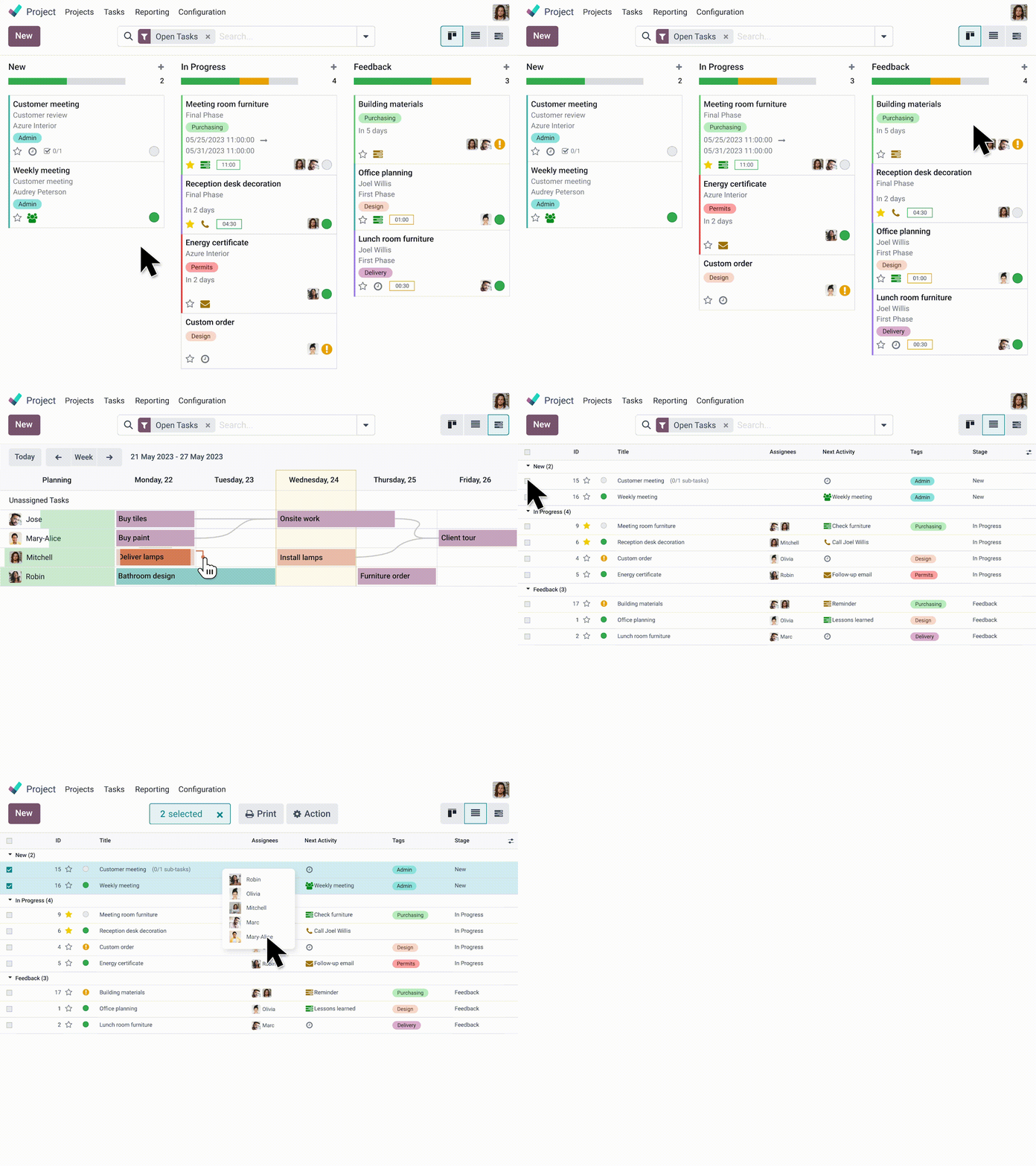
Our “Odoo workshop for SMEs: structure your processes and centralize your management with an ERP” session shows how to organize a company around a reliable central system. The point is not to add one more piece of software, but to replace scattered tools with a clear, structured way of working that can grow with you. We start with a quick process map: where the data comes from, who changes it and where it flows. This view lets us define a reasonable MVP scope, for example Sales + Invoicing + Projects + Bank, to deliver value quickly without disrupting the business.
🔗 Go further: Before configuring anything, every successful project starts with an analysis of the current setup. Find out how an Odoo audit works to understand how we map your processes before implementation.
Next, we walk through the end-to-end management chain in Odoo: an opportunity created in the CRM becomes a quote, signed online, turned into an invoice, then automatically matched with the bank payment. If a project is linked, timesheets capture the actual work and feed invoicing at the right time. On the purchasing and inventory side, replenishment rules prevent stockouts, receipts update costs and deliveries improve service tracking. Cash flow and customer payment reminders are managed from the same place, with a reliable history.
Odoo's value also comes from its automations: configured customer reminders, recurring invoices, automatically generated tasks, emails triggered by a status, and multi-level approvals for sensitive documents. You stay in control of the exceptions, and let the system handle the routine.
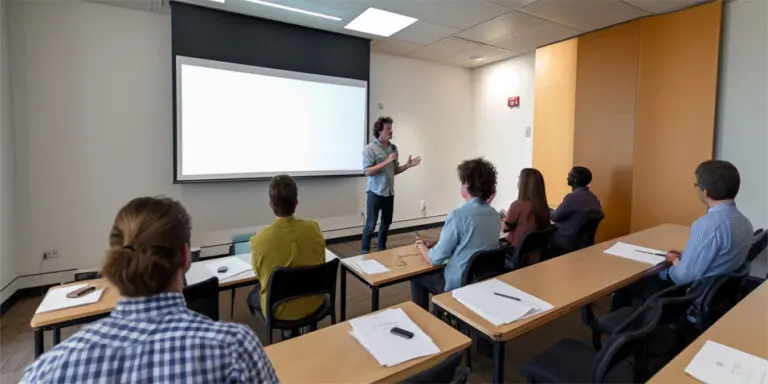
Finally, we add a pragmatic layer of artificial intelligence. Without overpromising, AI can help draft replies, summarize tickets, suggest a first outline for a proposal or spot an unusual variance. We rely on simple, repeatable business prompts tailored to your use cases.
The goal is twofold: fewer errors and faster execution. Teams gain peace of mind, business owners gain visibility. We move forward in short waves to avoid long stretches with nothing to show. And as the company grows, the scope can expand without starting from scratch.
🔗 Go further: Moving forward in short waves (the famous "MVP") is the key to avoiding the long stretches with nothing to show that sink so many software projects. Dive into our methodology and find out in detail how to carry out an Odoo implementation successfully, from A to Z.