Odoo audit and scoping: the phase that safeguards your ERP project
An Odoo project doesn't start with configuration. It starts with the audit and scoping. ERP projects rarely fail because of the software: they fail because of a poorly defined scope, unrealistic expectations, custom requests nobody challenged, or a lack of alignment between teams. The goal of this initial phase is to turn a vague intention into a realistic, costed action plan you can actually steer.
Let's secure your foundations
Don't launch a software project without auditing how your business processes really work.
Contact us1. The SPoC: the person steering the Odoo project
What is a SPoC?
Why is this role so important?
- Have a cross-functional view: understand how sales, accounting, inventory, production and support interact.
- Have decision-making authority: be able to settle issues without sending everything back to a committee.
- Be available: this role takes real project time, it is not a side task.
2. Key users: testing the project against day-to-day reality
Who are the key users?
What is their role during the audit and scoping?
- Describe current flows: tools, constraints, re-keying, friction points.
- Validate future choices: they are the first to test the Odoo flows and confirm they work for the business.
3. Pace and commitment: an Odoo project is not a passive purchase
What pace do we work at?
The client's work between workshops
Our workshops are there to scope, make decisions and advise, but on your side you also need to:
- Prepare the data: extract, sort and clean up your current databases.
- Clarify business rules: discounts, approvals, decision flows, commissions, etc.
- Review and test: validate the mockups, scenarios and choices we present.
4. The kick-off: aligning the whole company from the start
What is the kick-off meeting really for?
Why does management need to be there?
- Give the SPoC a mandate: publicly confirm their role and authority.
- Explain the ROI: remind everyone why the company is changing tools.
- Set the framework: endorse the principle of favoring standard Odoo whenever it makes sense.
Agree on how we communicate
5. Gap analysis: testing your needs against standard Odoo
Understanding your business flows
The real work of gap analysis
- Standard: Odoo already does it out of the box.
- Configuration: you only need to adjust the software settings.
- Organizational change: it is better to adapt the way you work than the code.
- Custom development: only if the need is truly differentiating and strategic.
6. Make trade-offs and know when to say no
Protecting the budget and the schedule
Our role is to challenge requests: are they really necessary? Are they useful before go-live? Can we get the same result another way?
🔗 Learn more: During scoping, our role is to protect you from technical debt. To understand how we make these trade-offs, read how to customize Odoo (and when to avoid it).
The Phase 1 / Phase 2 approach
Essential to running the business for phase 1, and what is desirable but not blocking for a phase 2. This approach keeps the budget in check, limits project fatigue and delivers value sooner.
7. Identify risks and prepare for change
Change management starts here
Address the real problems from the start
8. Deliverables: what you get at the end of scoping
What you actually have in hand
- The scope: what will be done, and what is excluded or postponed.
- The process map: how Odoo will handle your key processes.
- The schedule: the main milestones up to go-live.
- The budget: a consistent estimate based on the gaps actually validated.
🔗 Learn more: Scoping is approved, the deliverables are signed... What happens next? Dive into the execution phase with our guide explaining how to run an Odoo implementation in short cycles.
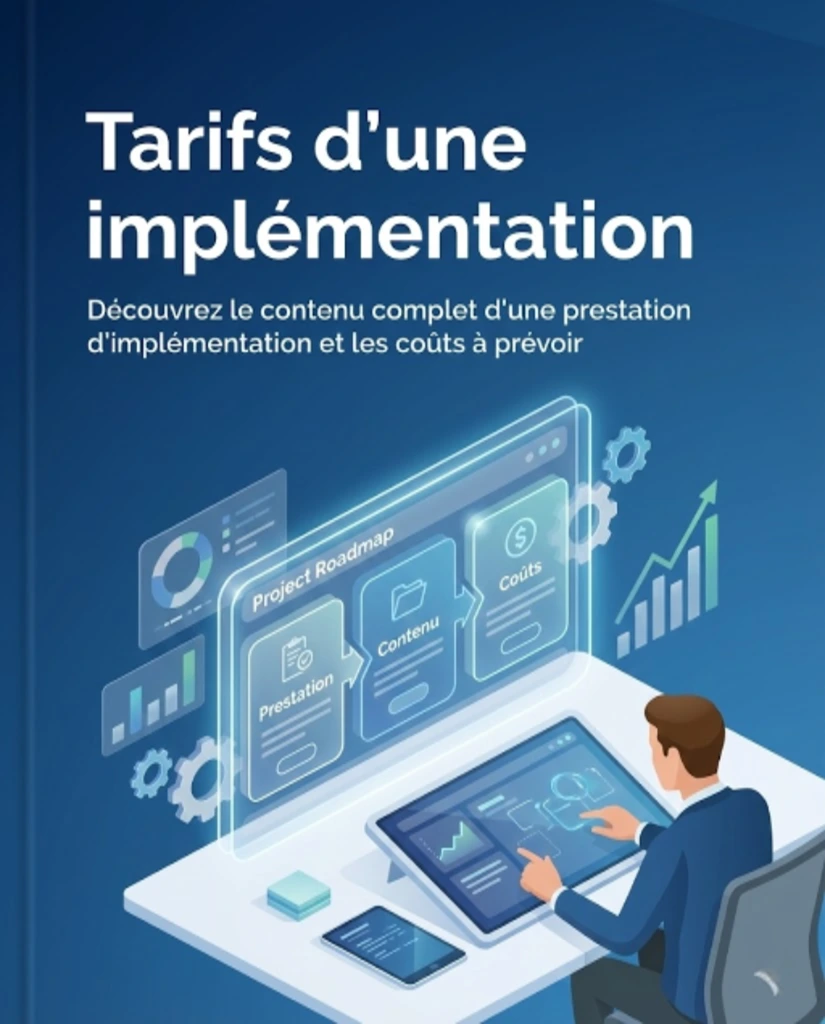
Estimate the cost of your IT project
See everything an Odoo implementation includes and the real costs to plan for in your project.
Estimate the cost of your IT project
See everything an Odoo implementation includes and the real costs to plan for in your project.

Make your project a success with our support
From audit to training, secure your ERP rollout. Request your strategic assessment, 100% free and with no commitment.
By phone or video call, at a time that suits you.
Hors du Commun • Odoo integrator in Lyon
ERP methodology • Odoo audit and scoping • SPoC, key users and gap analysis