
Organization, Team, Strategy: The 3 pillars of success according to 3 inspiring business leaders
We very (too) often insist that it is essential to design good products to build a business that works. It's true, but unfortunately, it is not the only criterion for success. And sometimes, it is not even enough.

In recent years, we have supported many business owners with their customer acquisition and internal structuring challenges. Do you know what most of these business owners had in common?
They were excellent experts at designing their product... but they were often at a loss when it came to building a real community, a solid structure and a lasting vision around that same product.
For us, as we explain in our strategy workshops, a business is built to last when it masters 3 fundamental levers:
- Organization
- Team
- Strategy
In my research, and in the same spirit as the remarkable work of putting women in the spotlight done by L’Équipe des Lyonnes, I wanted to analyze the journeys of three talented, committed women who managed to come out on top:
- Eileen Fisher: Founder of the clothing brand that bears her name (60 stores, more than 1,000 employees worldwide).
- Rose Marcario: Former President and CEO of Patagonia.
- Rebecca Burgess: Founder of the nonprofit Fibershed, author and advocate for regenerative agriculture.
Let's look at how these business leaders mastered these three pillars, and draw lessons you can apply to running your own SME.
1. How Eileen Fisher put Organization at the center of her company
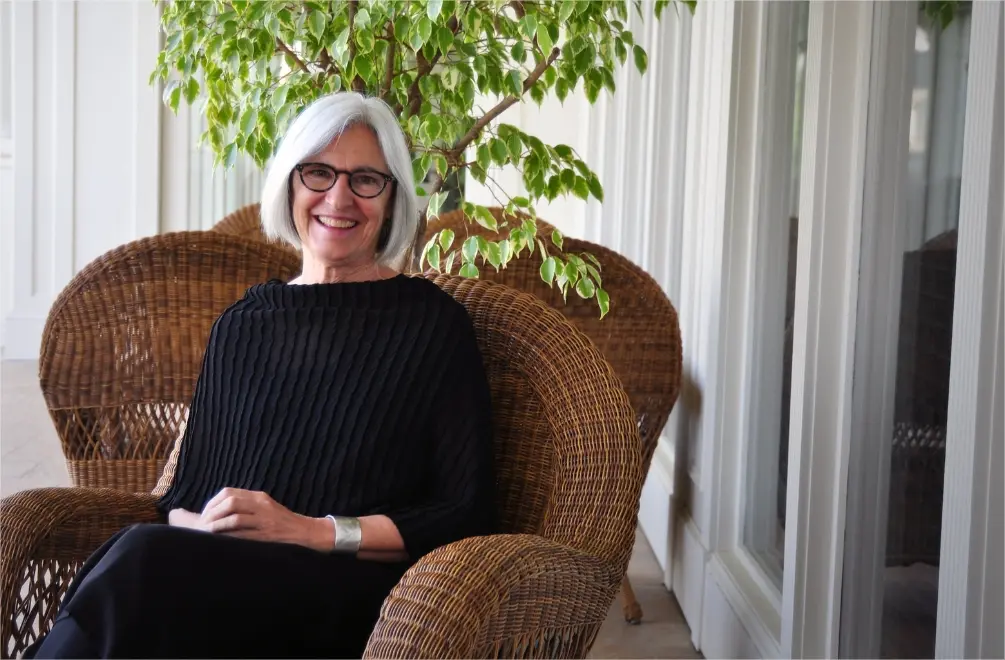
Eileen Fisher. Photograph by Matt Dunham.
Eileen Fisher is known for her unique vision of internal organization. In her view, a solid organization is the absolute backbone on which business success rests. When you look at her brand's trajectory, this statement makes perfect sense.
For her, an organization must follow two main principles:
- It must be sustainable: designed to last over time and adapt to market changes.
- It must be ethical: respectful and honest toward all stakeholders (employees, suppliers, customers).
Self-management and clarity above all
Eileen Fisher relies on self-management and encourages her teams to take initiative. This creates a collaborative atmosphere where innovation comes first. Indeed, her company's organizational structure is designed to foster cross-functional communication and collective decision-making.
“Leadership, for me, is having ears to hear what needs to be heard and eyes to see what is needed, free of any judgment.” (Eileen Fisher)
What sets the company apart is its commitment to the environment. For example, the company has set up a complex recycling initiative. Orchestrating the return of used clothing worldwide in exchange for discounts requires meticulous organization. The success of this initiative shows how remarkably effective their internal processes are (an area where tools like inventory management software make all the difference).
💡 How can you improve your company's organization?
- Clarify the structure: Everyone should know who they report to and how their work fits into the whole (using an ERP helps enormously to clarify processes during an audit).
- Encourage communication: Create an environment where problems surface without friction.
- Invest in the right tools: Use reliable software for planning and tracking (such as project management with Odoo).
- Ask yourself: What concrete mechanisms have you put in place to ensure smooth coordination between your internal teams and your external service providers?
2. How Rose Marcario brought the Patagonia team together

Rose Marcario. Photograph by Tommaso Mei.
Rose Marcario, the former CEO of Patagonia, left a lasting mark through her transformational leadership. Under her guidance, the company not only took off financially but also strengthened its environmental commitment. At the heart of this success? An unshakable team.
As magazines such as Forbes and Fast Company often report, Rose Marcario insists on placing absolute value on people:
“A company can only thrive when its employees are deeply valued and engaged.” (Rose Marcario)

Hiring for values and engagement
For Marcario, hiring is not based only on technical skills, but above all on values. Commitment to a strong mission starts with selecting people who share the company's long-term vision.
Managing a team goes far beyond supervision. It involves active listening and creating a space of psychological safety. This culture of trust is what allowed Patagonia to lead the way in innovation (such as creating 100% recycled clothing). Employees are not mere executors; they are researchers and problem-solvers.
💡 How do you build and manage a high-performing team?
- Mindful hiring: Hire people who share your values and bring a diversity of perspectives.
- Continuous development: Invest in training to increase their satisfaction (centralizing information in a management tool lets youeliminate thankless tasks and give more value to intellectual work).
- Recognition: Reward contributions regularly.
- Ask yourself: How does your company concretely foster an inclusive environment where every member can speak up without fear?
3. Rebecca Burgess and the art of the strategic pivot at Fibershed
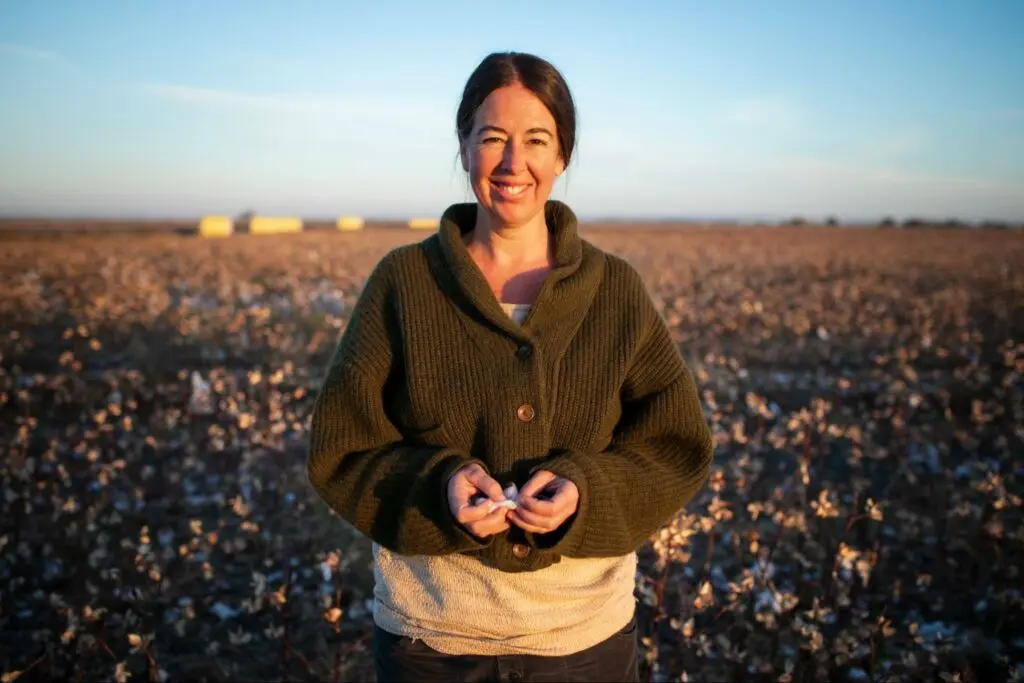
Rebecca Burgess. Photograph by Paige Green.
The key to a thriving business lies not only in formulating a solid strategy, but above all in the ability to adjust it in the face of unexpected challenges. Rebecca Burgess, the visionary behind the nonprofit Fibershed, offers a striking example of the importance of staying clear on your mission while reassessing your roadmap.
The textile industry is extremely volatile ground. Burgess stresses the importance of keeping a critical eye on the initial strategy:
“In a rapidly changing world, strategic rigidity is a company's Achilles' heel. Our flexible approach has allowed us to stay relevant. An effective strategy is not set in stone. It is alive, it breathes and it evolves over time.” (Rebecca Burgess)

Agreeing to pivot your model
One of Fibershed's "pivot" moments came when it became clear that some regional production principles conflicted with the overall goal of reducing the carbon footprint. Burgess and her team did not hesitate to reassess their strategy by incorporating agroforestry initiatives.
“Reassessing our strategy did not mean moving away from our vision. It meant aligning more closely with the realities of the world,” she explains.
Growing a business is never done blindly. As the Harvard Business Review often points out, questioning your strategy is not a sign of weakness, but the mark of insightful management (a logic also found in the digital reorganization of a company after a major change).
💡 How do you build a sustainable business strategy?
- Step back: Regularly assess your strategy in light of changes in your market.
- Stay agile: Be ready to pivot your processes (modern tools such as agile ERPs let you adapt the business technically without breaking everything).
- A learning culture: Be open to feedback from customers and employees.
- Ask yourself: Which quantified indicators (KPIs) do you use to measure the relevance of your strategy, and when have you scheduled its next review?
In conclusion
In a constantly changing business world, the importance of a structured organization, a close-knit team and an agile strategy should never be underestimated. The "good product" is not enough. It needs a foundation to support it.
Eileen Fisher, Rose Marcario and Rebecca Burgess perfectly embody the execution of these three fundamental pillars. By applying their philosophies at the scale of your SME (and relying on the right processes and tools to get there), you will build a truly resilient business.
I hope you enjoyed this article! It took quite a bit of research, so if its content resonates with you, feel free to share it on your networks. :)
❓ FAQ: Structuring your business to last
- L'Équipe des Lyonnes (committed women's network): https://www.lequipedeslyonnes.fr/
- Harvard Business Review (Strategic agility): https://hbr.org/
- Fast Company (Interviews with Rose Marcario & Patagonia): https://www.fastcompany.com/
- Fibershed (Rebecca Burgess's nonprofit): https://fibershed.org/

Article written by Billy Felicie
Business strategy and digital structuring expert at Hors du Commun (Lyon). I have been helping SME business owners optimize their organization and integrate high-performing tools (ERP/CRM) for more than 5 years.